

From construction sites racing against time and new roads taking shape to urban spaces poised for transformation, Dong Nai City is approaching a major turning point with significant potential for growth.
Bustling Expressway and Airport Construction Sites
In the final days of August, tens of thousands of workers remained hard at work at construction sites across Dong Nai City despite unpredictable rain and sunshine. From Long Thanh International Airport to expressways, ring roads, provincial roads, cross-city routes and riverside corridors, a new infrastructure network is gradually taking shape.
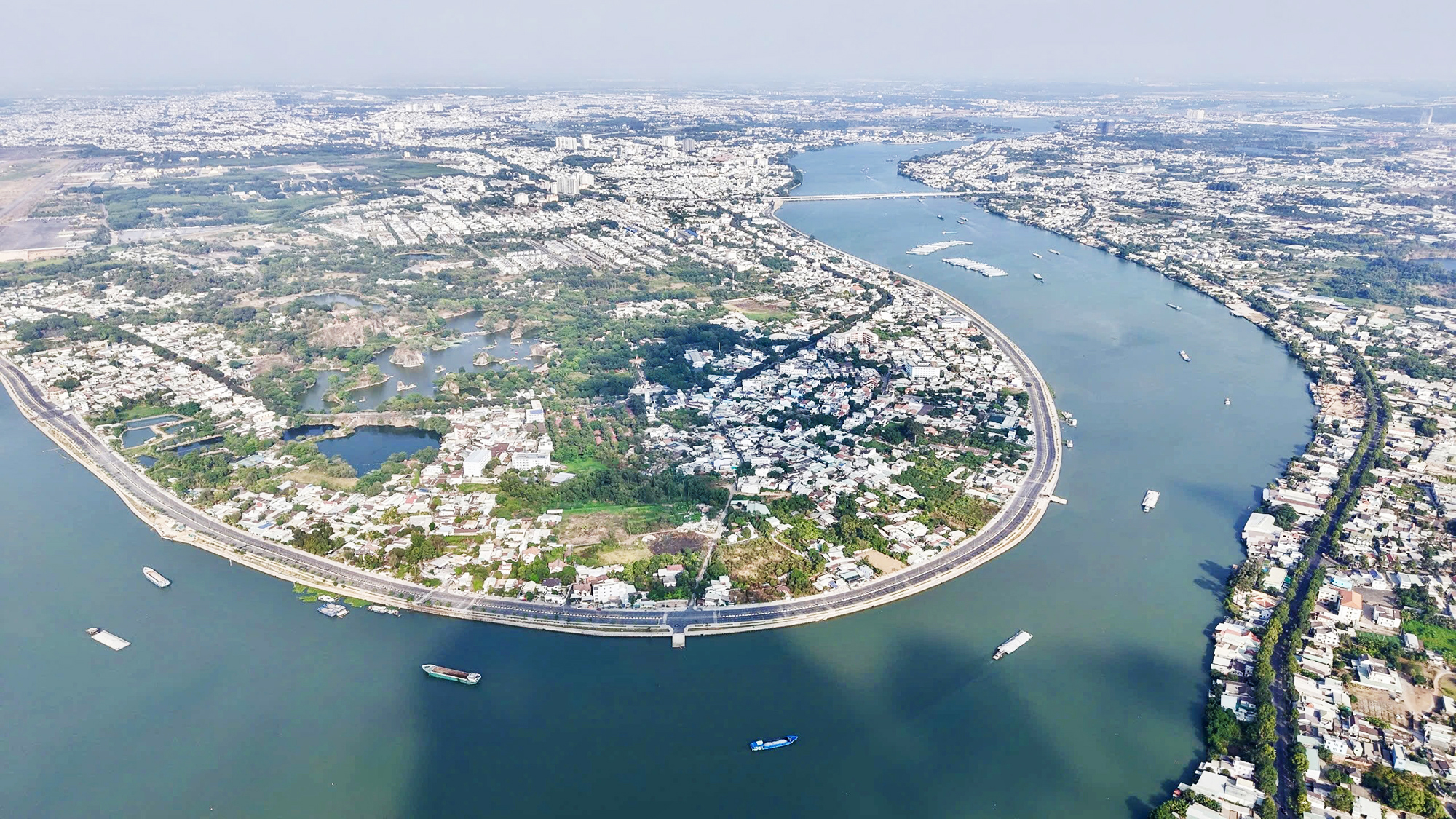
Panoramic view of central Dong Nai City.
Only about four months have passed since April 30, 2026, when Dong Nai City was officially established, yet visible changes have already begun to emerge.
At the heart of this infrastructure network is Long Thanh International Airport, which is entering the final stage of construction with the goal of commencing operations by the end of 2026.
To support the airport, a series of connecting transport projects are also being accelerated. The expansion of the Ho Chi Minh City – Long Thanh – Dau Giay Expressway is completing key components to increase direct connectivity between Ho Chi Minh City and the airport.
At the same time, the Ben Luc – Long Thanh Expressway, Bien Hoa – Vung Tau Expressway, Ho Chi Minh City Ring Road 3, National Highways 25B and 25C, and Provincial Roads 769, 773 and 770B are creating additional routes to the airport from different parts of the city.
As a result, areas that were previously far from major urban centers will gain better conditions for the development of urban areas, logistics, industry, commerce and services once they are connected by major transport routes. This is also how Dong Nai City’s urban space is expanding, with infrastructure creating multiple new development hubs.
In the central area, Bien Hoa 1 Industrial Park, which has been closely associated with Dong Nai’s industrial history for decades, is being considered for functional conversion, with plans to develop it into a new Political and Administrative Center.
Meanwhile, new riverside roads are creating additional cross-city transport corridors while expanding public spaces along the river.
Long Thanh Airport as a Game Changer
Within the city’s new urban structure, Long Thanh International Airport is expected to be the most transformative factor. Once operational, the airport will serve not only as an aviation hub but also generate substantial demand for logistics, accommodation, commerce, finance, conferences and tourism.
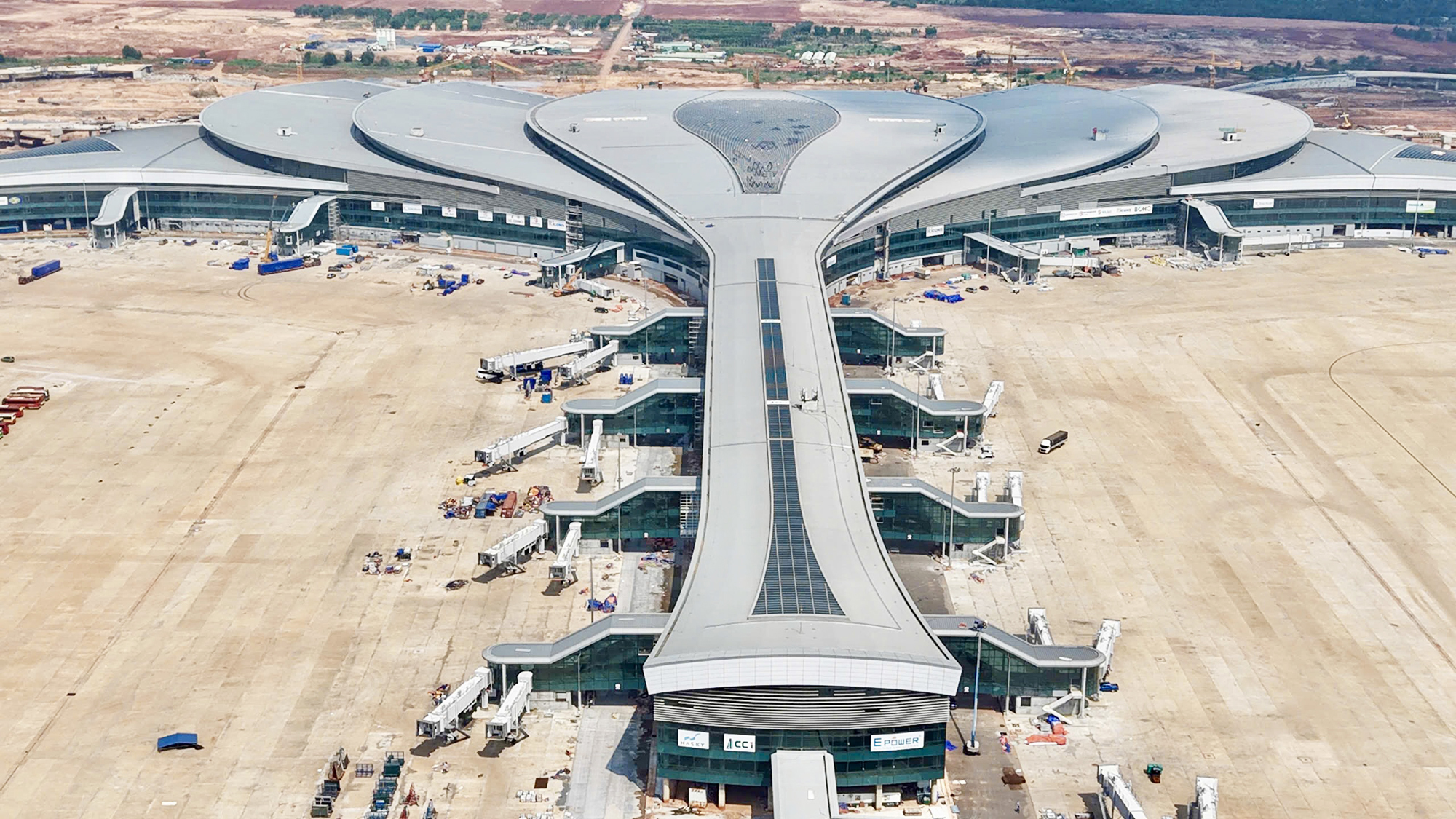
Long Thanh International Airport is currently accelerating construction toward completion.
According to Assoc. Prof. Dr. Trinh Tu Anh from the Institute of Smart City and Management at the University of Economics Ho Chi Minh City, Long Thanh Airport could become the nucleus of an airport city model, stimulating the development of a wide range of services, commercial activities and tourism.
Once completed, the scale of Long Thanh Airport will create significant opportunities for a non-aeronautical service ecosystem, including hotels, convention centers, shopping, entertainment and services catering to international passengers.
The benefits will not be limited to areas surrounding the airport. Transport links connecting Long Thanh with Bien Hoa, Ho Chi Minh City and neighboring urban areas are expected to create new development corridors, allowing logistics, commerce and services to spread along the transport network.
Accordingly, Long Thanh – Nhon Trach and areas surrounding the airport could emerge as a major hub for aviation, logistics, high technology and international services. Meanwhile, the Bien Hoa – Long Thanh – Phuoc An corridor and routes connecting to Dau Giay will create further opportunities for ports, logistics, industry and interregional services.
Dong Nai City is therefore expected to develop not around a single center, but through multiple interconnected hubs. Long Thanh – Nhon Trach, Bien Hoa, the Phuoc An corridor and areas along major transport routes will perform different functions while remaining connected within a unified network.
This will provide the foundation for the city to pursue a polycentric, green and smart urban development model.
According to Assoc. Prof. Dr. Tran Dinh Thien, former Director of the Vietnam Institute of Economics, Long Thanh Airport, when connected with expressways, ring roads, logistics systems and other strategic infrastructure, will give Dong Nai a highly competitive development position within Vietnam’s Southeast region.
This advantage creates opportunities for Dong Nai City to develop high-tech industries, the aviation economy, logistics, commerce, finance, services and innovation. At the same time, its proximity to Ho Chi Minh City will help attract skilled workers, knowledge and high-quality investment capital.
Infrastructure Creates New Value
On July 21, 2026, the Politburo issued Resolution No. 16-NQ/TW on the development of Dong Nai City through 2035, with a vision to 2065.
The resolution sets the goal of developing Dong Nai by 2035 into an airport city, riverside city, polycentric, multi-purpose, green and smart urban area. By 2065, Dong Nai is envisioned as a globally connected city and one of the leading multifunctional airport cities. That vision is gradually taking shape.
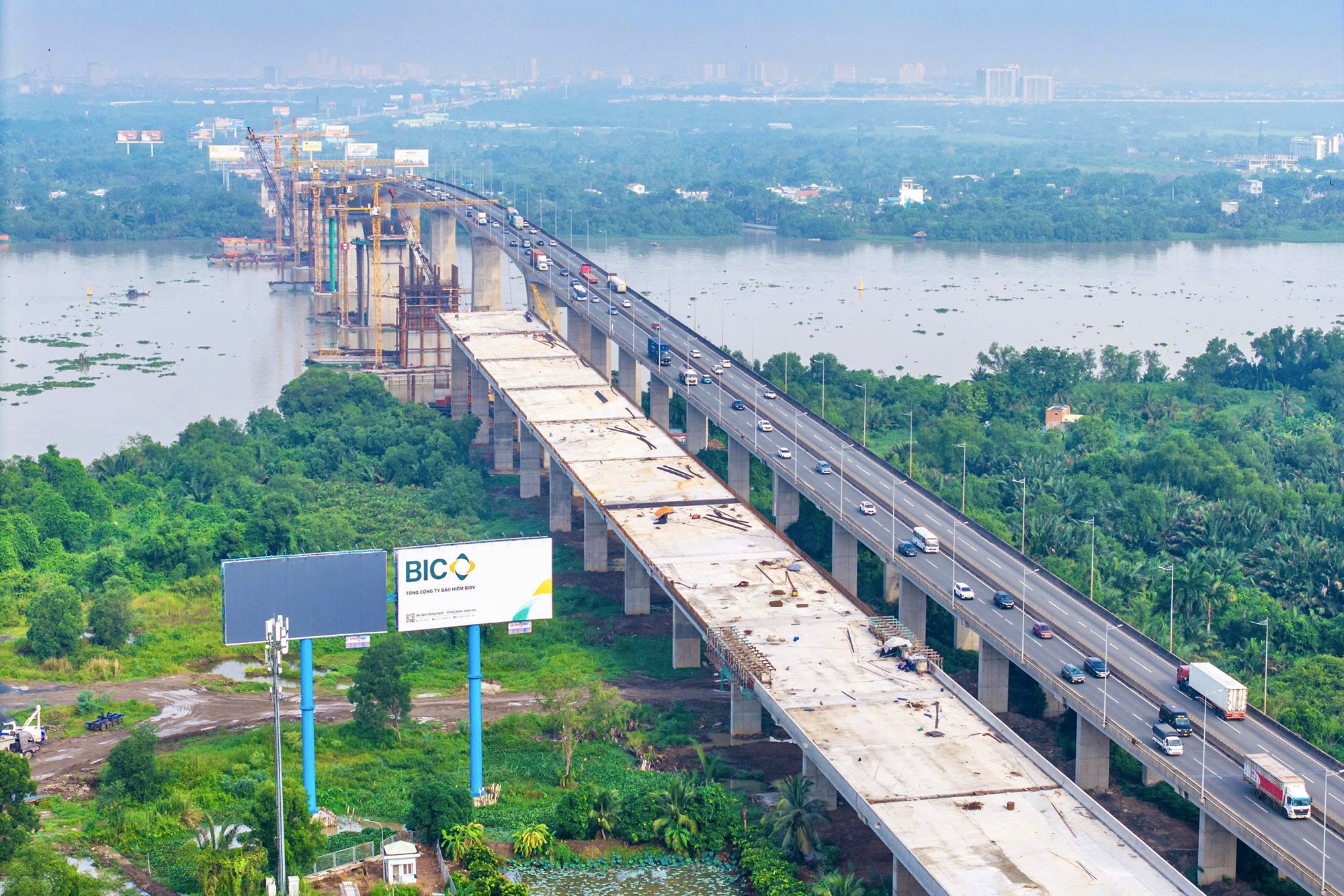
The expansion of the Ho Chi Minh City – Long Thanh – Dau Giay Expressway will improve connectivity between Ho Chi Minh City and Long Thanh International Airport.
Speaking with Construction Newspaper, Nguyen Kim Long, Standing Vice Chairman of the Dong Nai City People’s Committee, said the city has a major opportunity to transform its advantages in location and infrastructure into genuine competitiveness.
According to Long, airports, expressways and new connecting roads are only necessary conditions. Infrastructure can truly generate growth only when it helps reduce logistics costs, shorten travel times, expand investment opportunities, create high-quality jobs and improve people’s quality of life.
“Infrastructure can pave the way, but the investment environment and the quality of governance ultimately determine whether capital flows in, stays and continues to grow,” Long said.
To transform its infrastructure advantages into drivers of economic growth, Dong Nai has identified three key breakthrough directions.
The first is to develop coordinated planning around Long Thanh International Airport, expressways, ring roads, ports and the Dong Nai River corridor while establishing a multimodal transport and logistics network.
The second is to accelerate the transition toward high-tech industries, the aviation economy, modern logistics, high-quality services and the digital economy.
The third is to reform administrative procedures, improve transparency in urban planning, strengthen predictability and clearly define the responsibilities of individual agencies and authorities.
Through these measures, Dong Nai aims to turn its rapidly expanding infrastructure network into a foundation for sustainable economic growth and a new urban identity.
Source: baoxaydung.vn – Minh Tuệ 02/09/2026, 18:30 – Diện mạo mới của thành phố trẻ Đồng Nai
