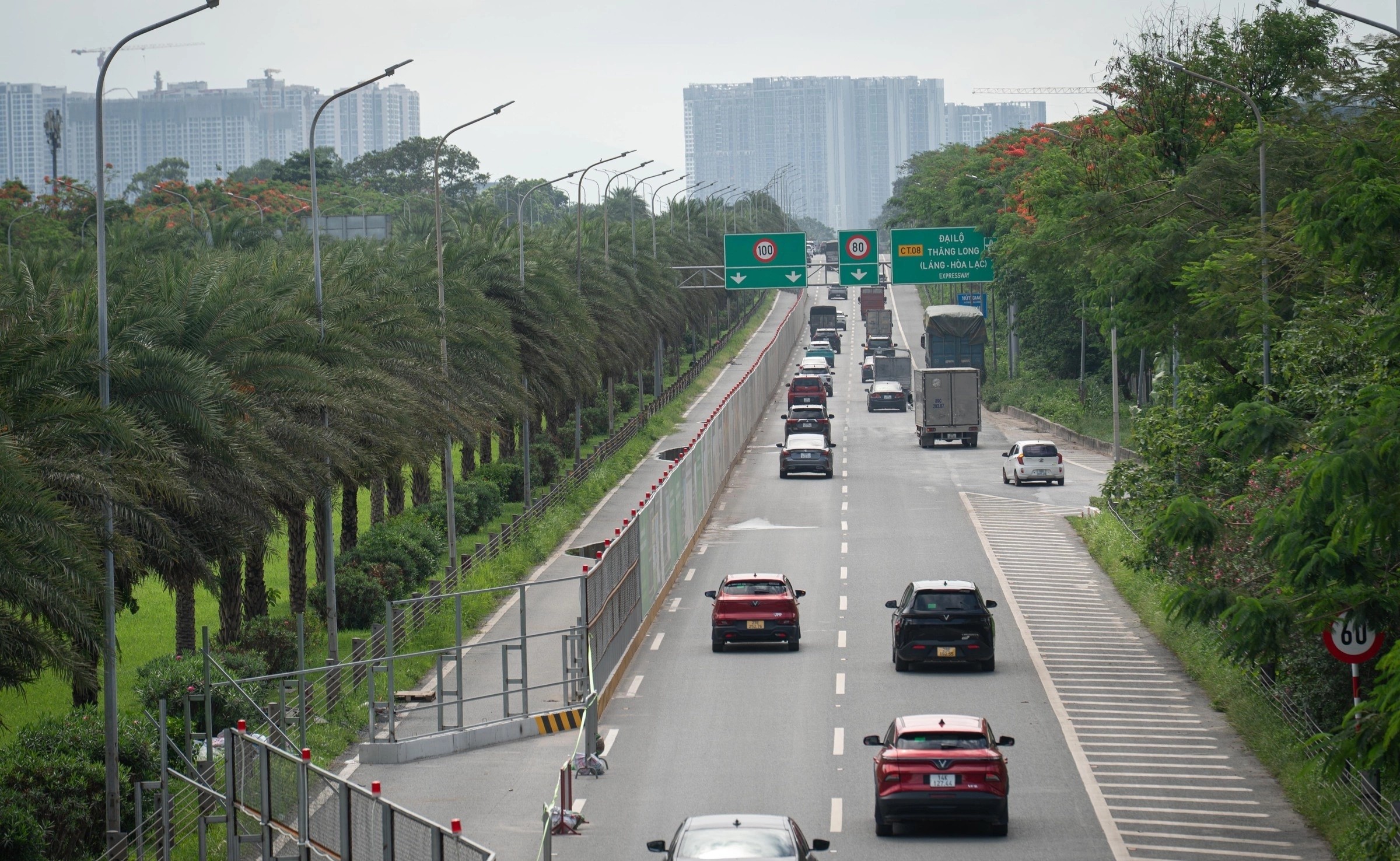
In addition to projects in the city center, numerous major infrastructure developments are currently underway in Hanoi’s suburban areas, including ring roads, Thuong Cat Bridge, Ngoc Hoi Bridge, Hong Ha Bridge, and the expansion of National Highway 6. These projects are expected to significantly transform the capital’s urban and transportation landscape.
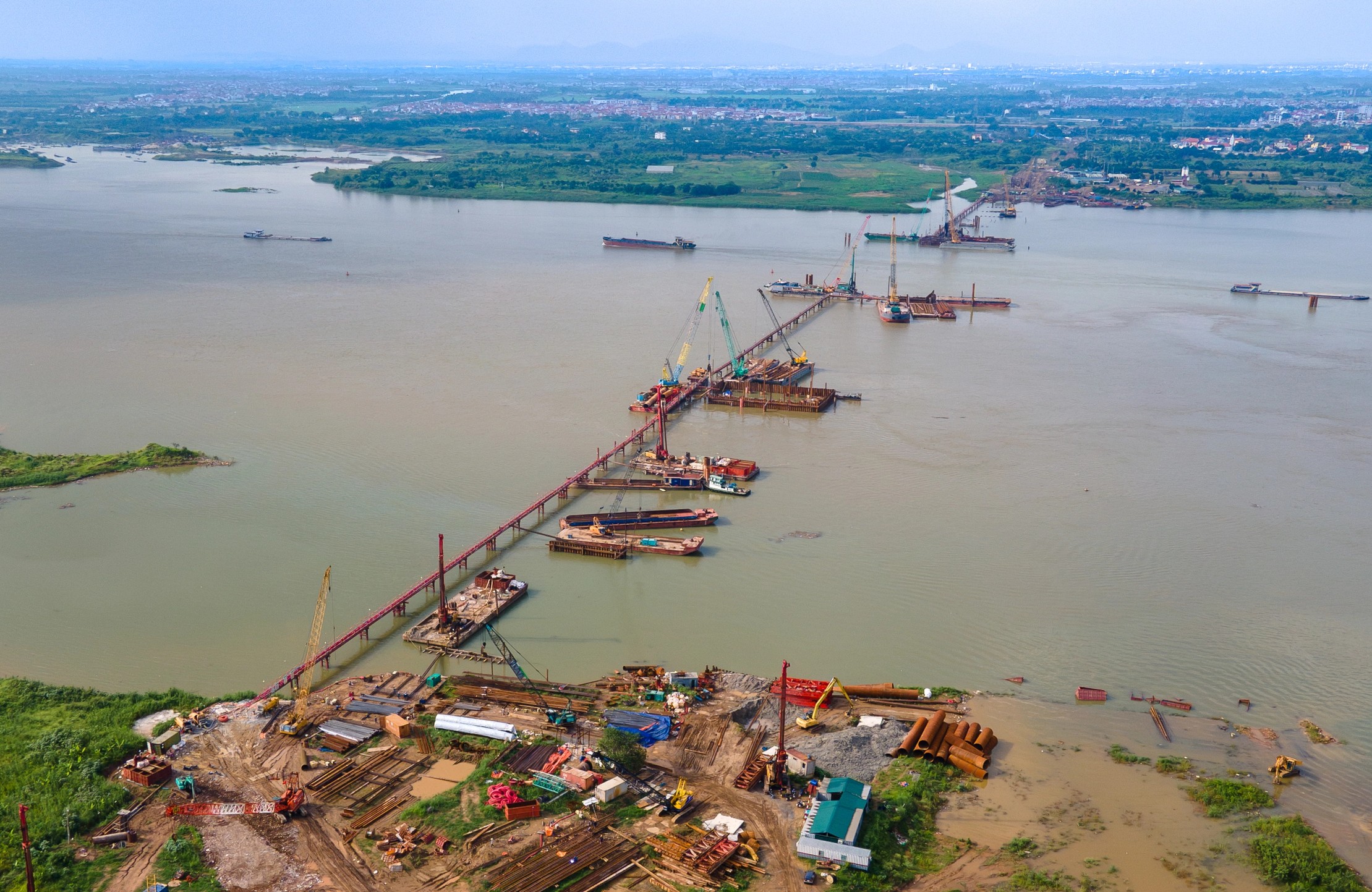
Thuong Cat Bridge, spanning the Red River together with its approach roads, is currently under accelerated construction. With a total investment of more than VND 7.3 trillion, the project connects Ring Road 3.5 in Thuong Cat Ward with National Highway 23B in Thien Loc Commune, Hanoi.
Once completed, the project will contribute to the completion of Ring Road 3.5 and strengthen transportation links between Hanoi’s northwestern area and the city center. Contractors are currently focusing on bored pile construction for the main bridge piers and approach bridges.
In the section passing through Thien Loc Commune, several bridge piers have begun to take shape. According to the design, Thuong Cat is a cable-stayed bridge, with the entire route extending more than 5.2 km, including approximately 3.9 km of bridge structures. The section crossing the Red River is 780 m long and features three major spans. The project is expected to be completed in 2027.
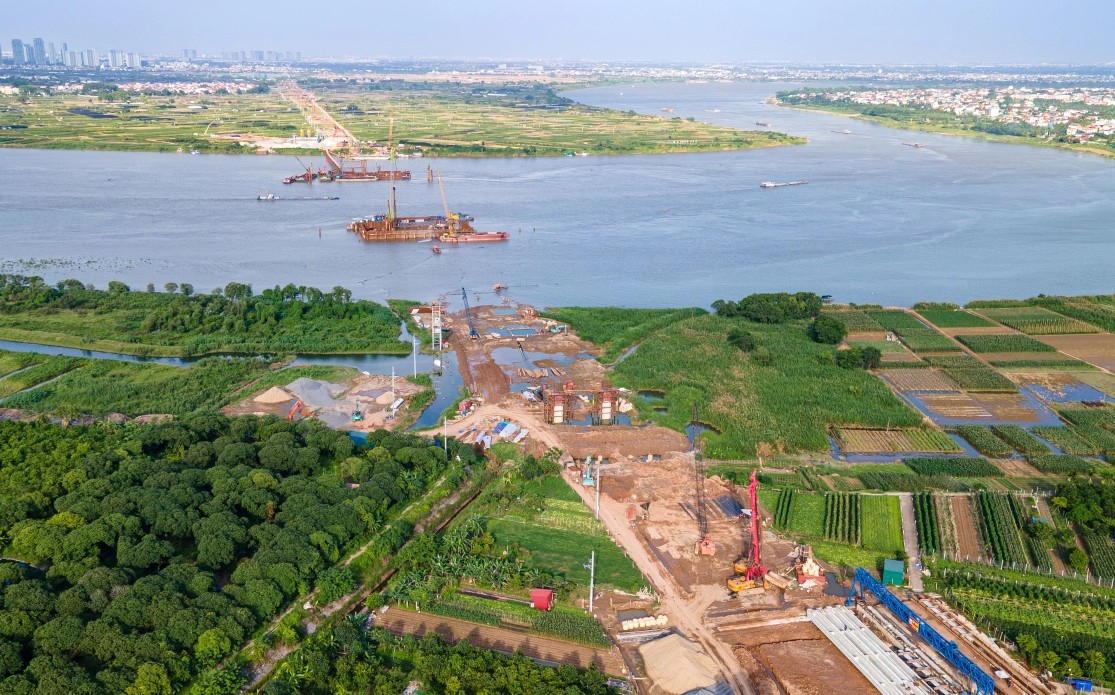
Ngoc Hoi Bridge, located along Ring Road 3.5, is approximately 7.5 km long and connects Hanoi with Hung Yen Province. Of the total length, approximately 5.2 km is located in Hanoi and 2.3 km in Hung Yen.
The project begins on Ring Road 3.5, approximately 360 m from the Phap Van–Cau Gie Expressway toward the Huu Hong Dyke. Its endpoint is approximately 700 m from the Ta Hong Dyke toward the Hanoi–Hai Phong Expressway, passing through Van Giang and Phung Cong communes in Hung Yen Province. Contractors are currently focusing on bored pile construction on both sides of the river while accelerating work on foundations and approach bridge piers.
At the construction site, workers are fabricating reinforcement cages for bored piles. Contractors are simultaneously carrying out multiple construction activities with the goal of completing the project before the 2027 APEC Summit.
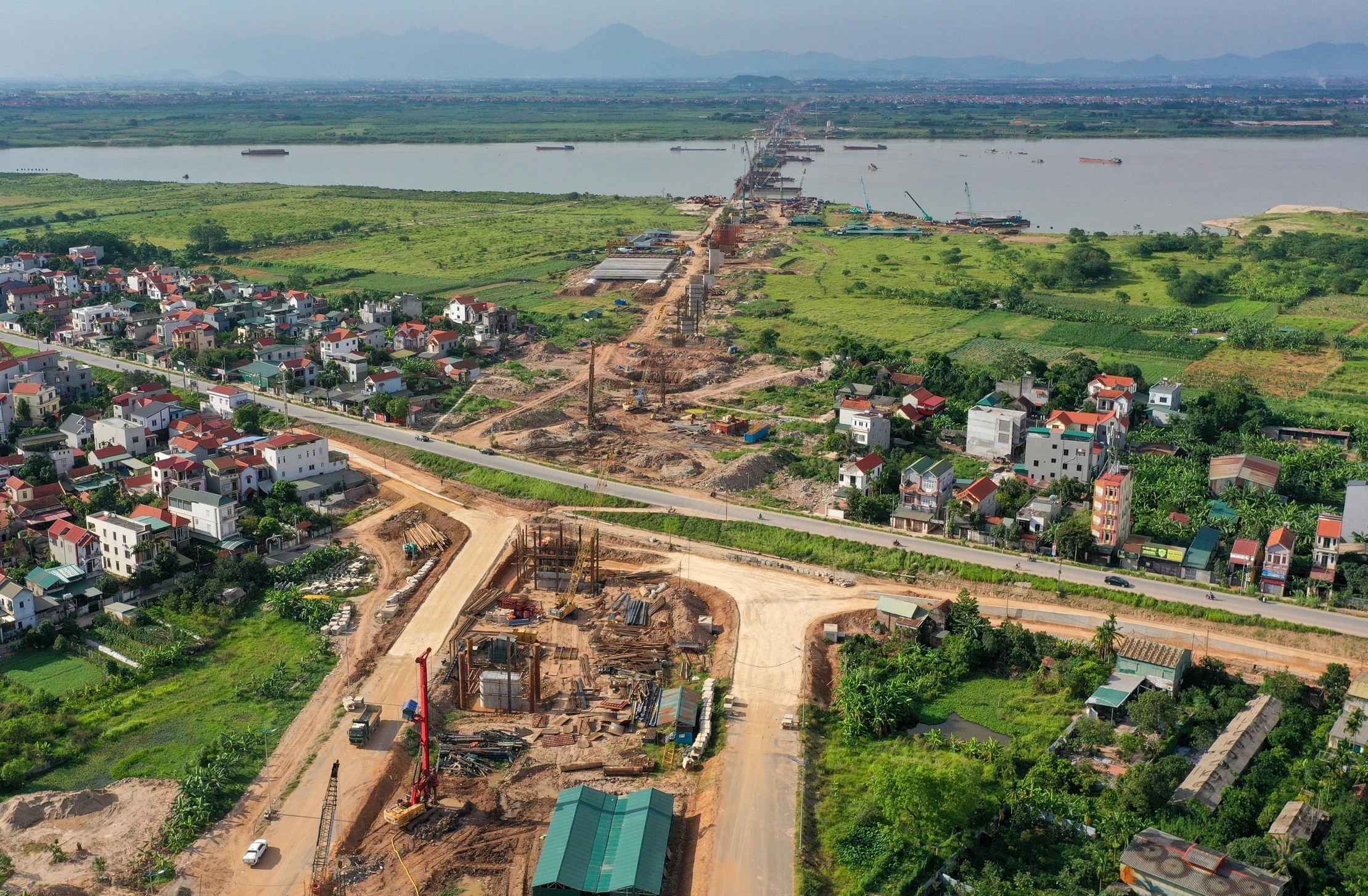
Located on Ring Road 4, Hong Ha Bridge connects the two banks of the Red River, beginning in O Dien Commune, formerly part of Dan Phuong District, and ending in Van Khe Commune, formerly part of Me Linh District. Approximately six months after construction began, work has accelerated, with the first bridge pier gradually taking shape in the river.
In the section passing through O Dien Commune, several bridge piers have already emerged. Dozens of bridge girders have also been prefabricated for installation in the coming stages. Contractors have mobilized extensive machinery, equipment, and personnel to accelerate construction.
The project has a total length of approximately 6 km, including the main bridge and approach roads at both ends. According to the design, the bridge will accommodate four motor vehicle lanes and have a cross-sectional width of approximately 24.5 m.
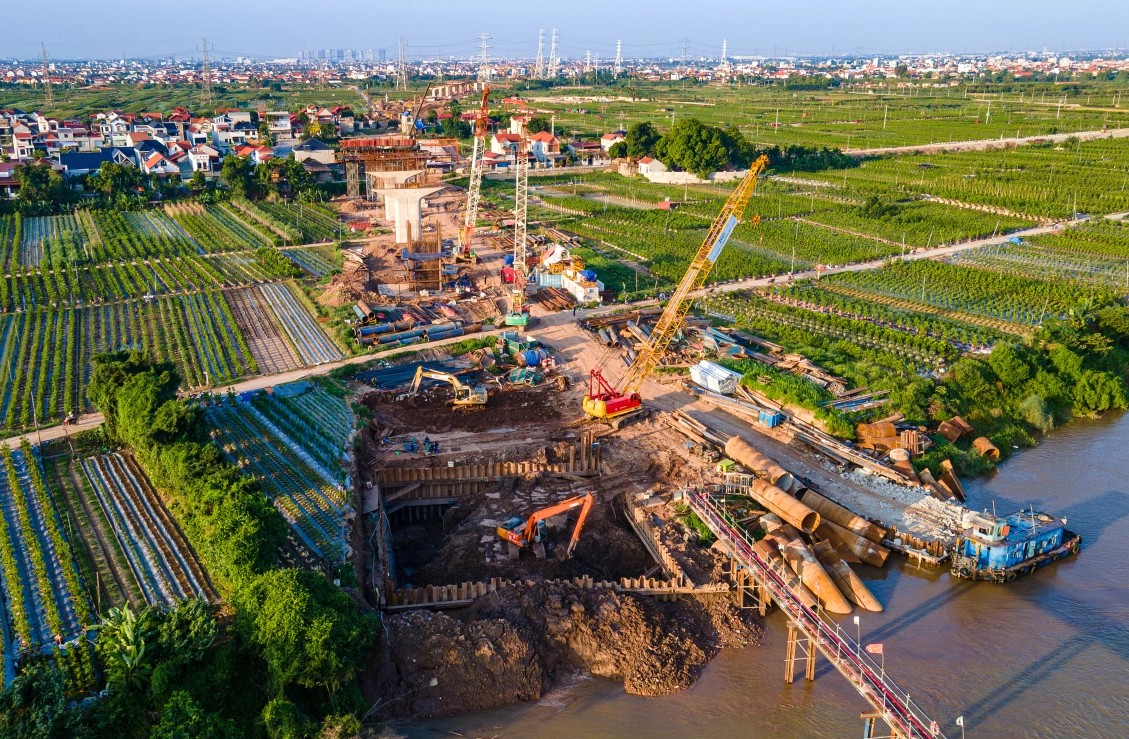
Me So Bridge, spanning the Red River and connecting Hanoi with Hung Yen along Ring Road 4, is also undergoing accelerated construction. The bridge will be 24.5 m wide, featuring four motor vehicle lanes as well as lanes for motorcycles and non-motorized vehicles. The project has a total investment of approximately VND 4.9 trillion.
According to the design, the bridge will have two main piers located in the Red River. Contractors are currently constructing the first foundation piers on both riverbanks. On the Hanoi side, construction of the elevated approach road is also progressing rapidly, with numerous approach bridge piers beginning to take shape.
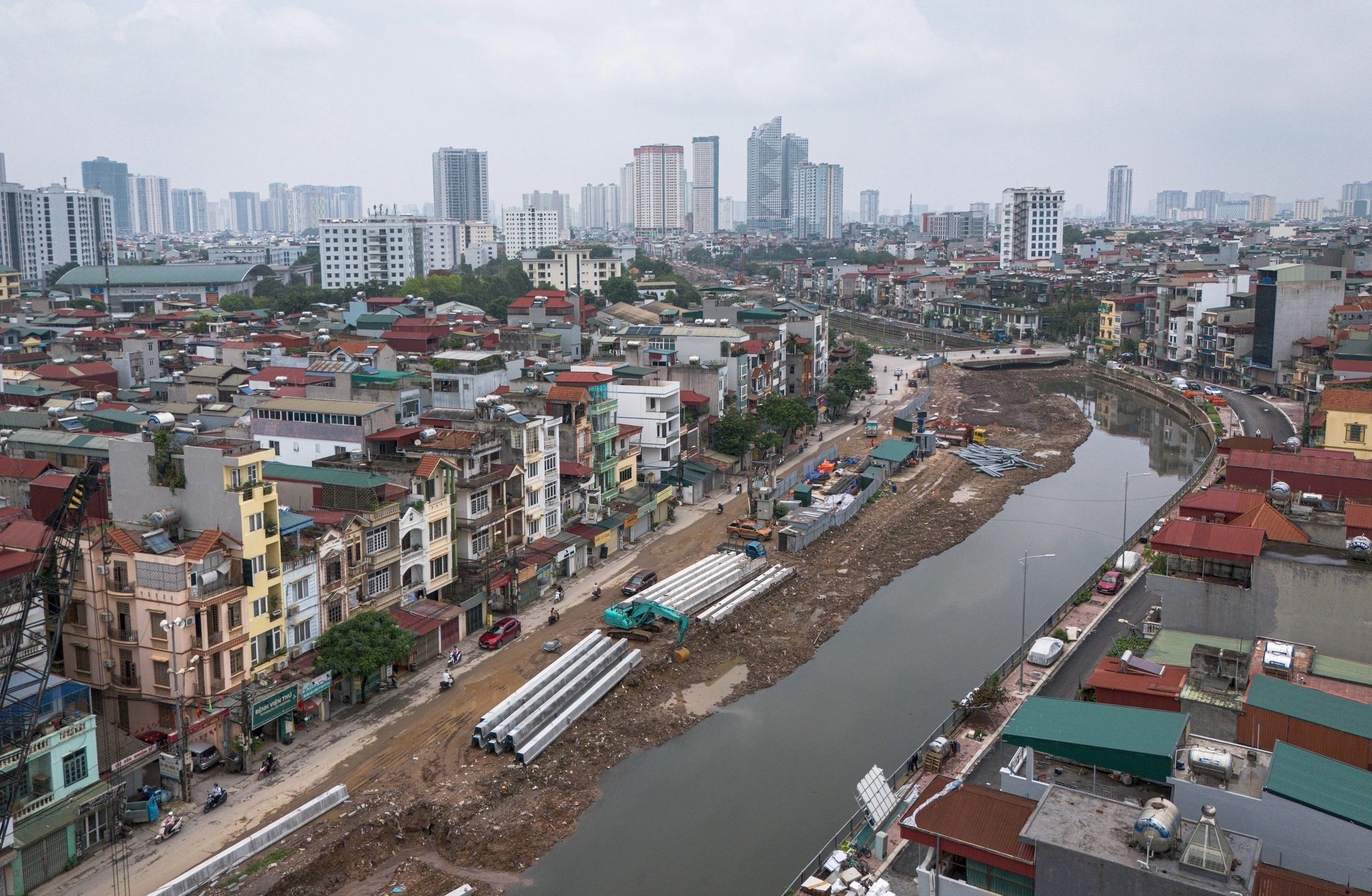
The La Khe Canal section near Ngo Quyen Street is undergoing construction as part of an approximately 6-km canal route connected to the Yen Nghia drainage pumping station. Construction materials remain scattered across several areas, while some sidewalk sections are still incomplete.
At the construction site, workers are driving piles to construct embankments along both sides of the canal. Each pile is approximately 18 m long and is driven deep into the canal bed by cranes before concrete is poured. The western Hanoi drainage project, centered around the Yen Nghia pumping station, is designed to provide drainage for approximately 6,300 hectares of agricultural land, prevent flooding in surrounding wards and communes, and help lower water levels in the Nhue River to improve drainage across western Hanoi.
The project to improve the drainage system in western Hanoi was adjusted twice, in 2019 and 2021, bringing its total investment to nearly VND 7.47 trillion. The main facilities were handed over by the Hanoi People’s Committee to Song Nhue Irrigation Development Investment One Member Company Limited for management and operation in January 2020.
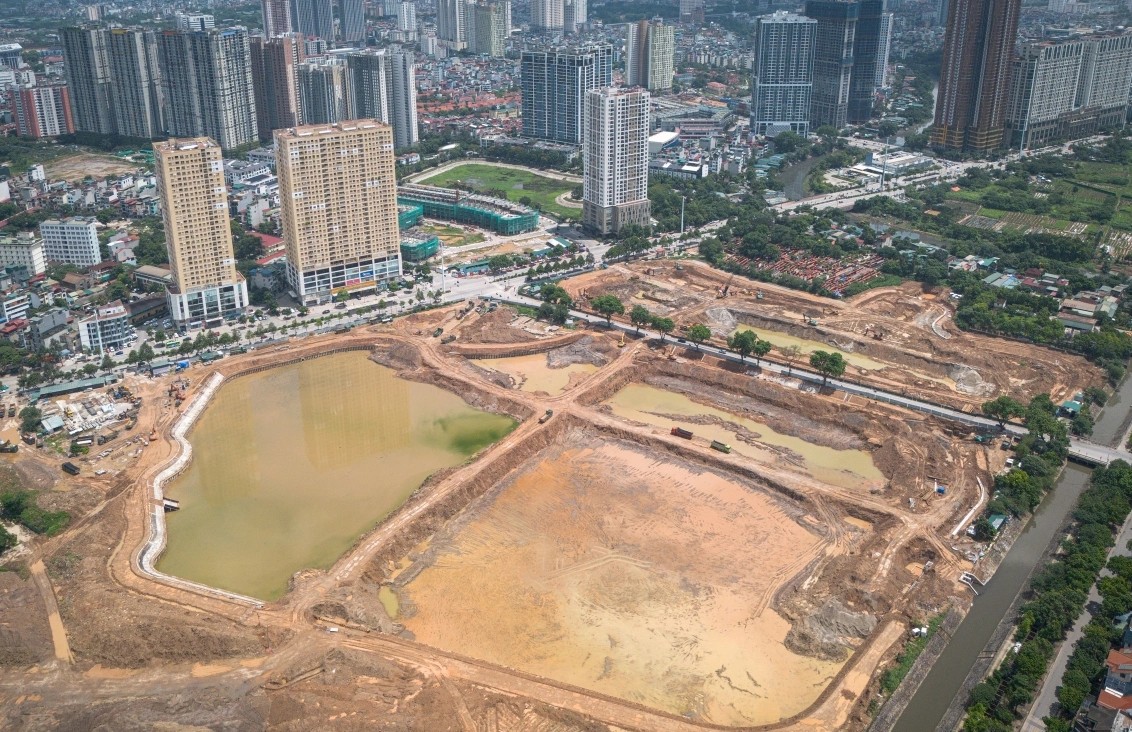
The Me Tri (Dong Bong 2) Retention Lake Project has a total investment of approximately VND 370 billion. The lake covers approximately 12 hectares and is surrounded by more than 1.9 km of embankments. The project also includes a regulating culvert connecting the lake with Dong Bong Canal and the installation of control gates.
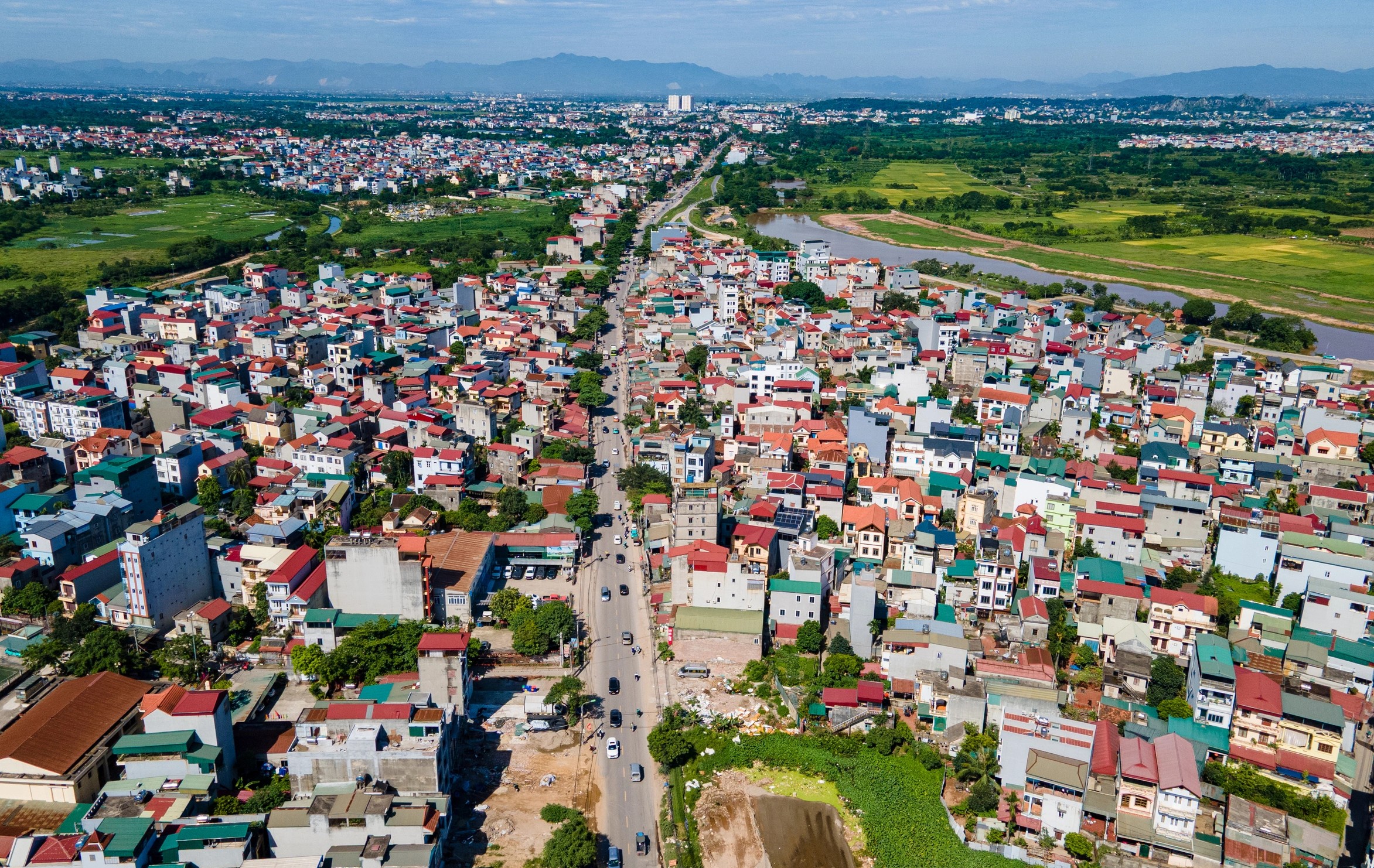
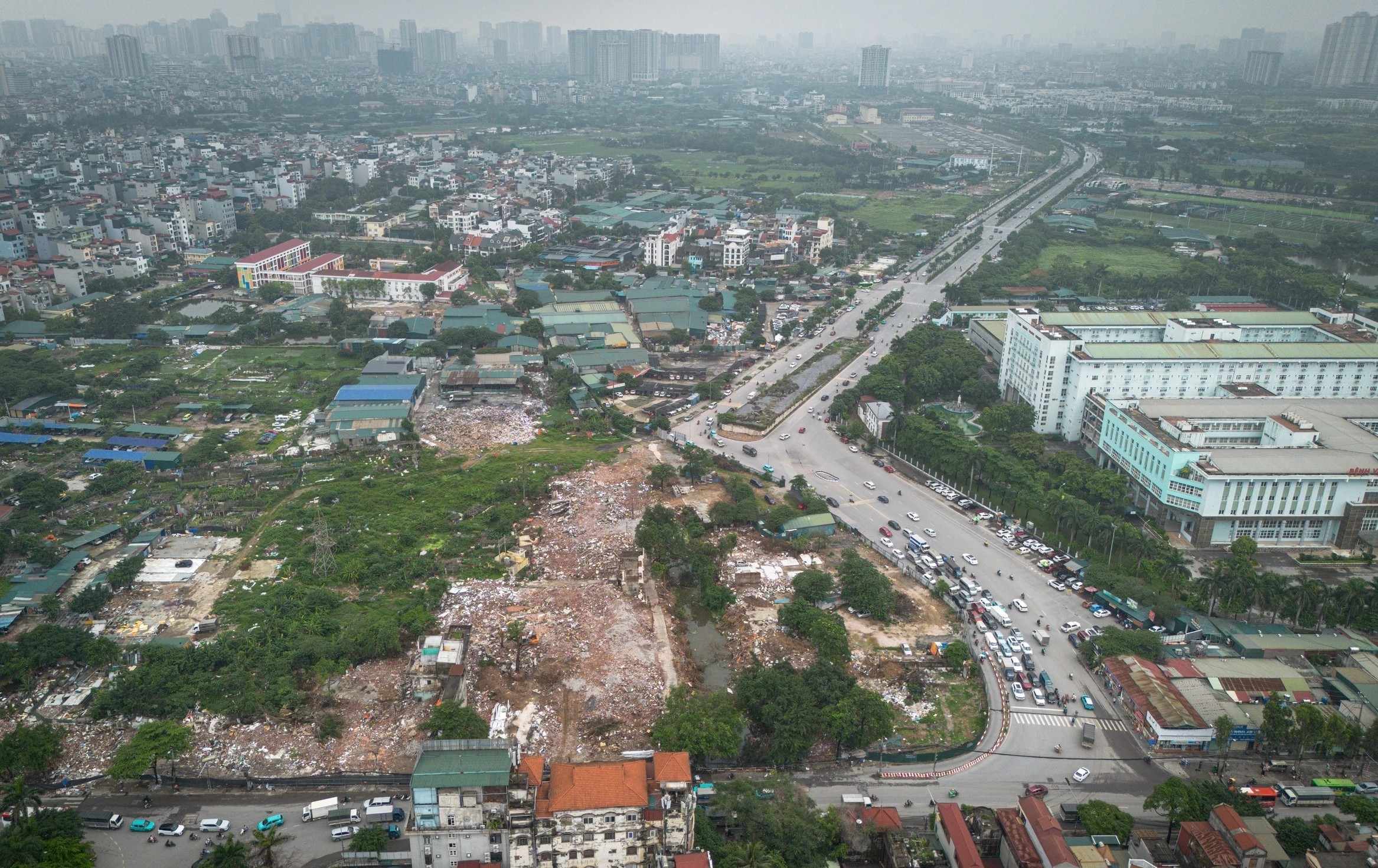
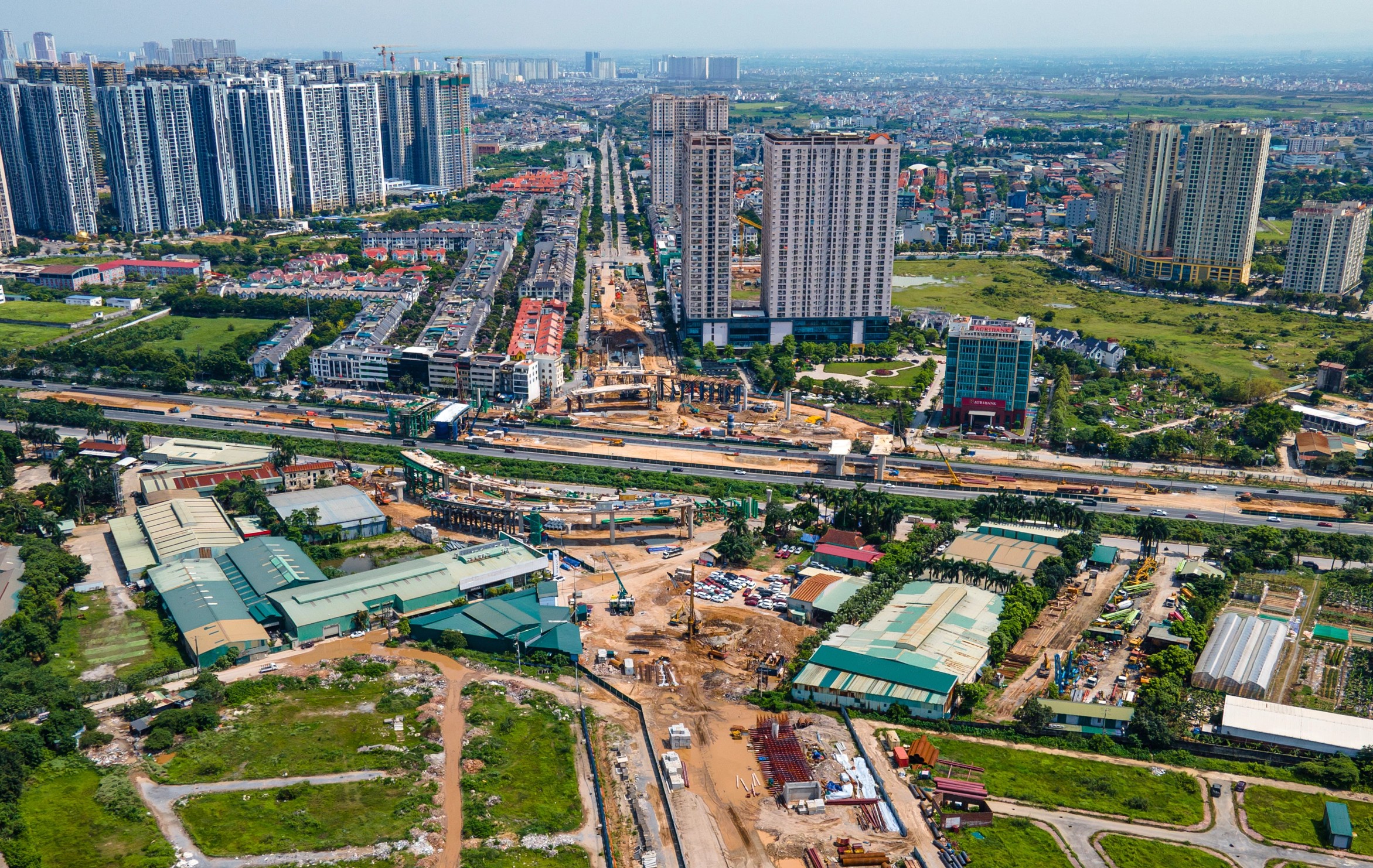
The Ring Road 3.5 – Thang Long Boulevard Interchange Project includes cut-and-cover tunnel sections, open tunnel sections, and elevated turbine-style ramp bridges. With a total investment of more than VND 2.38 trillion, construction began in April 2025. The underpass is 975 m long and accommodates four traffic lanes, while the ramp bridge system extends more than 2.3 km, helping separate traffic flows and reduce conflicts between vehicles.
Hanoi’s Ring Road 3.5 is approximately 53 km long and 42–80 m wide, extending from Ngoc Hoi Bridge to Thuong Cat Bridge. It passes through several major transportation corridors, including Phap Van, Xa La–Thanh Ha, the Southern Axis Road, National Highway 6, Thang Long Boulevard, and National Highway 32.
The route consists of nine sections. Some are currently under investment preparation or have yet to be implemented due to funding constraints, while the remaining sections are either under construction or already operational. Hanoi has completed approximately 15 km of Ring Road 3.5, but the route cannot yet operate as a continuous corridor because the interchange with Thang Long Boulevard remains incomplete.
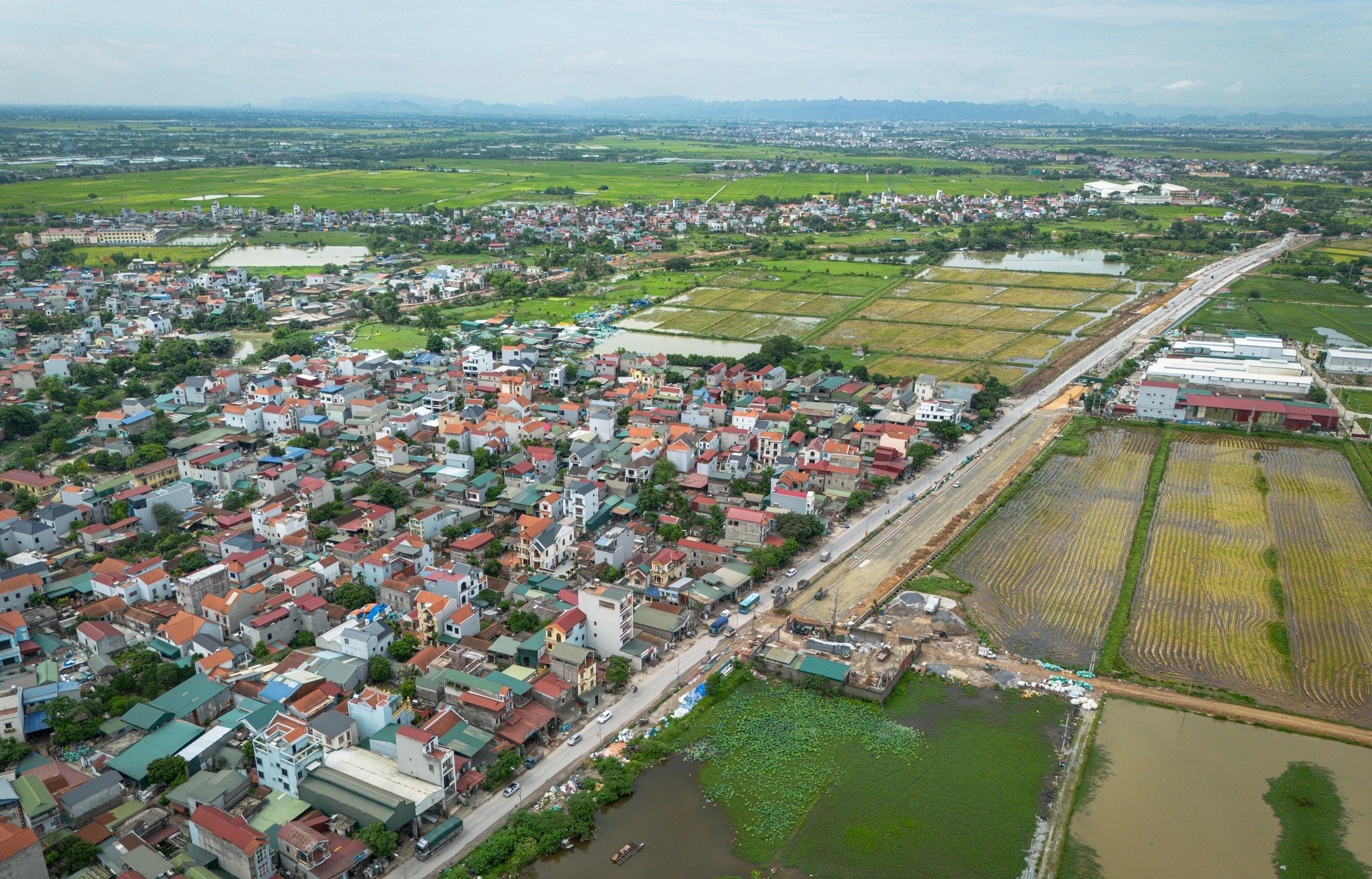
The National Highway 21B Expansion Project passes through eight communes in southern Hanoi and extends approximately 41 km. The route begins in Kien Hung Ward and ends at its connection with National Highway 1A south of Gie Bridge, in the former Chuyen My Commune. Currently, 6.25 km of the route has been opened to traffic, approximately 16.64 km is under construction, and nearly 19 km has yet to receive investment according to the approved plan.
At the section passing through Xa Cau Industrial Cluster in Ung Thien Commune, workers are installing sidewalk paving. National Highway 21B is designed with a road width ranging from 11 to 35 m, but construction has not yet been completed. Vehicles currently travel on a divided roadway approximately 8 m wide.
Approximately 9 km away, the Southern Hanoi Development Axis Road Project, also known as National Highway 21C, has a total investment of more than VND 6 trillion. Around 26 km of the route has already been completed and put into operation.
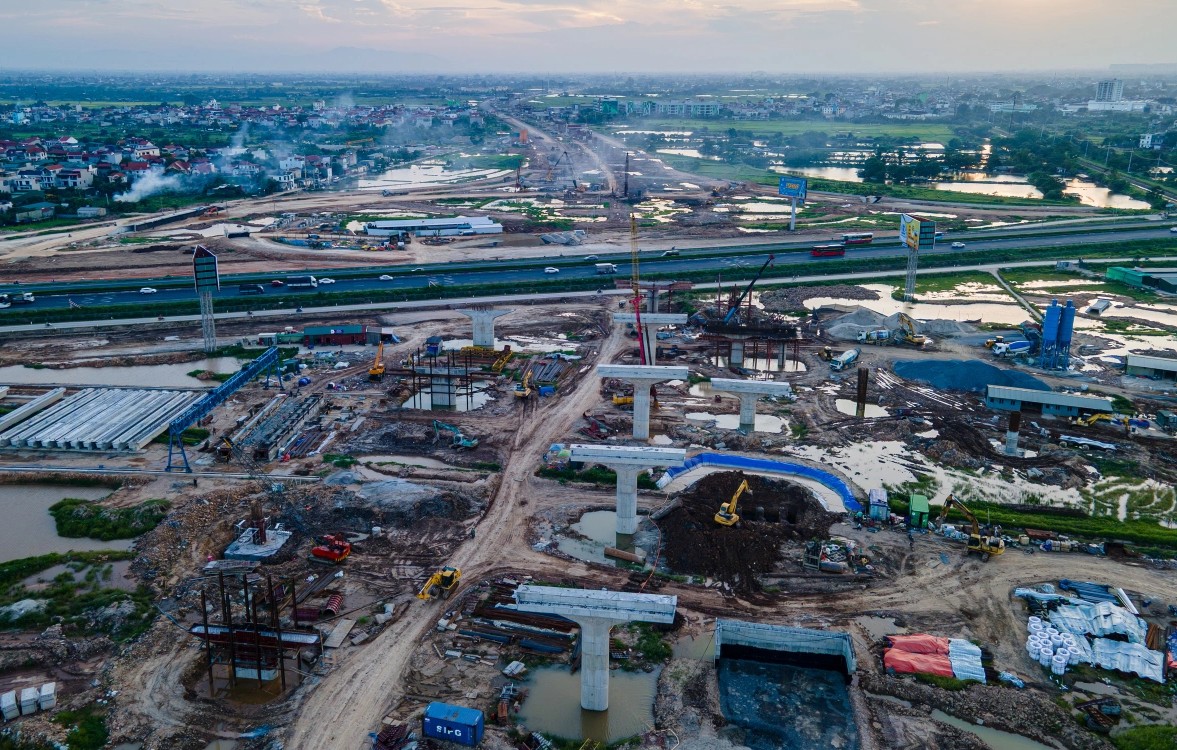
The Ring Road 4 interchange with the Phap Van–Cau Gie Expressway, passing through Thuong Tin Commune, Hanoi, is currently under accelerated construction. At the construction site, dozens of direct flyover piers are being built simultaneously using a wide range of specialized machinery and equipment.
The interchange is designed as a multi-level junction incorporating direct flyovers to improve connectivity and minimize traffic conflicts between major transportation corridors.