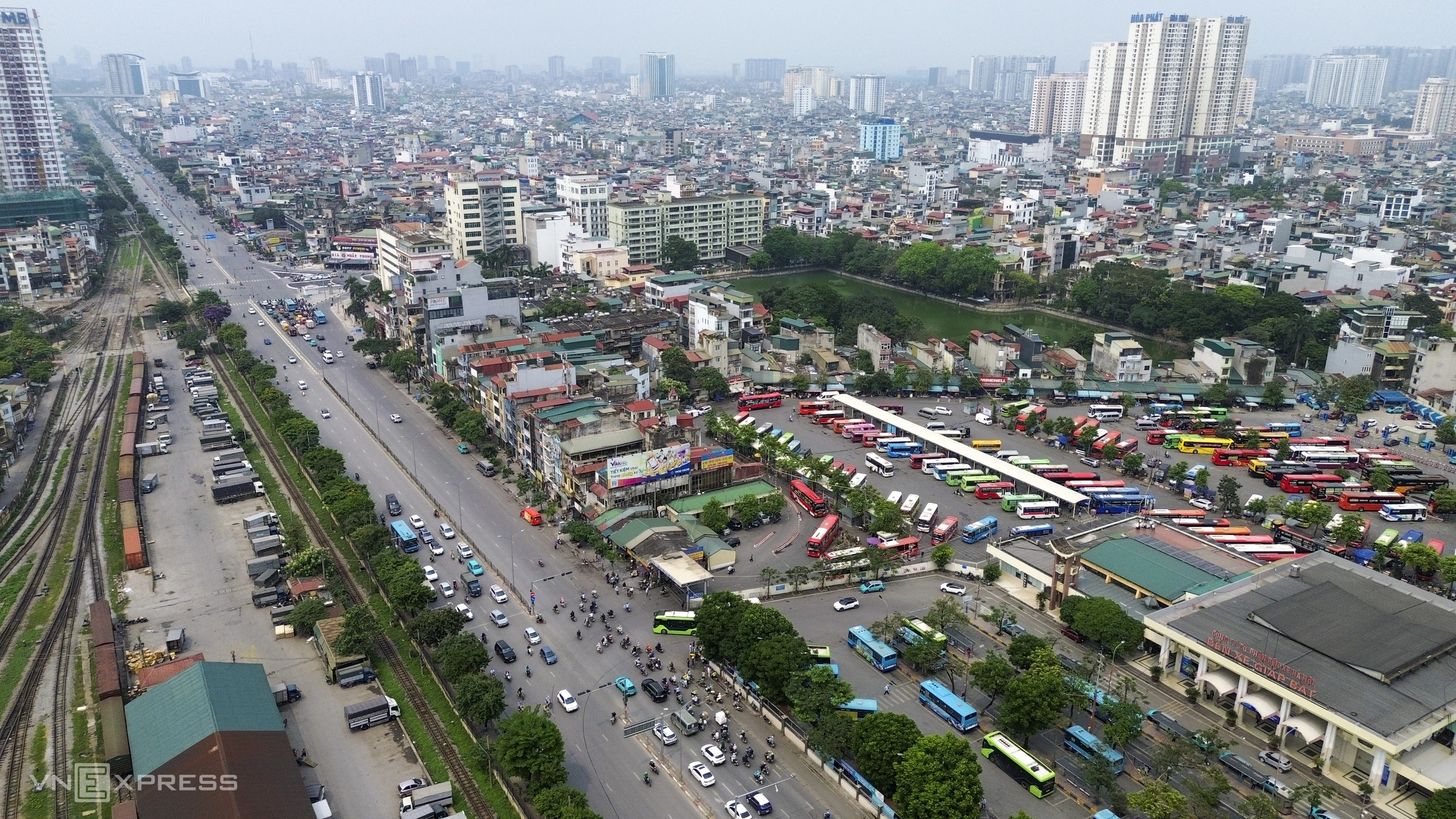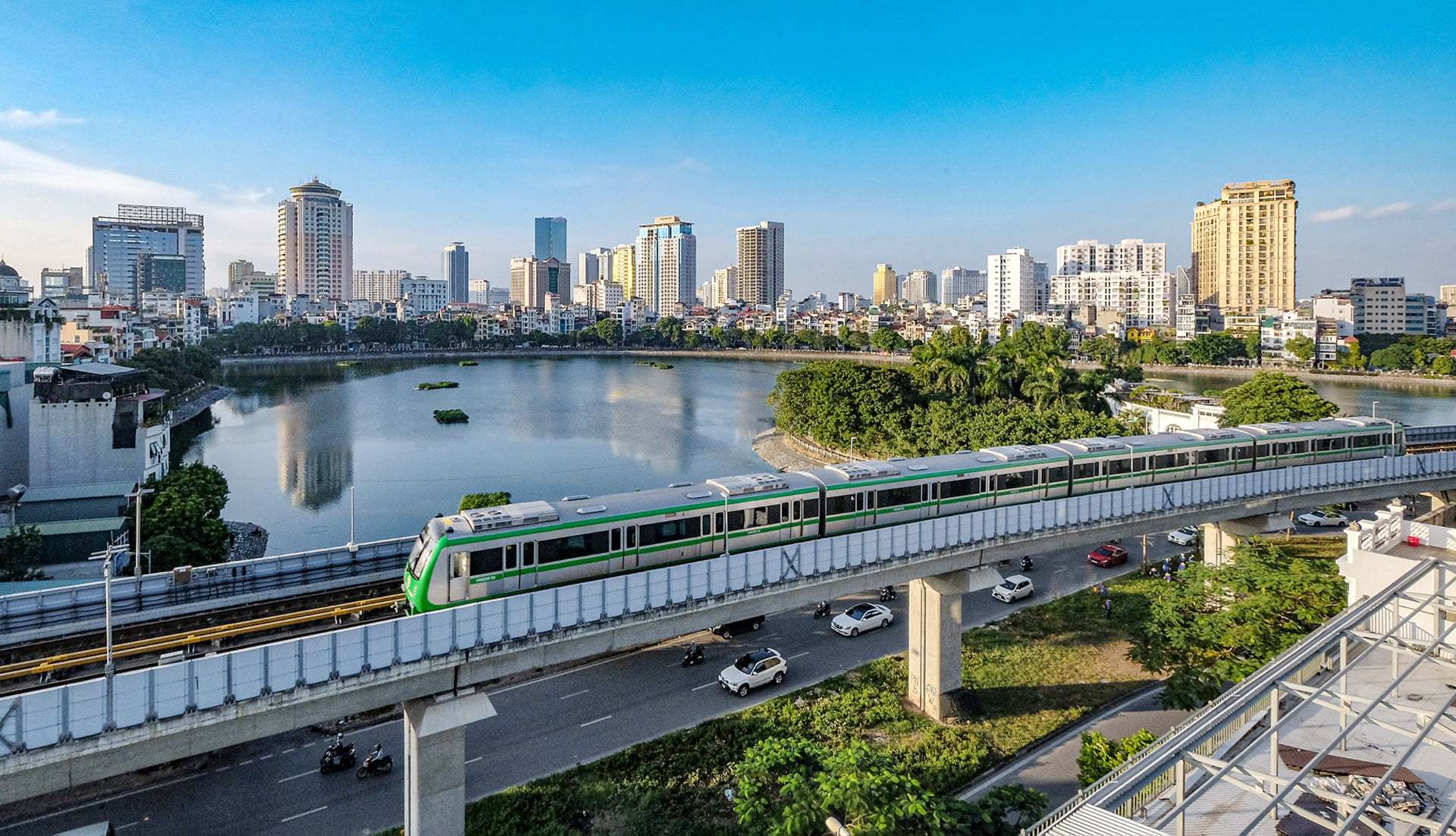


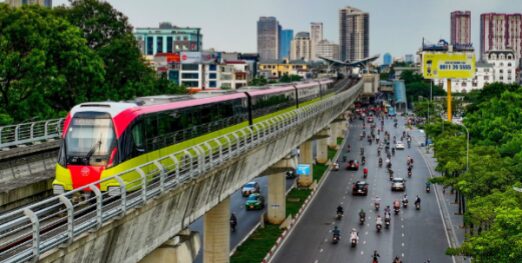
The Hanoi People’s Committee has officially approved the red-line boundary for Metro Line 5, section Van Cao – Hoa Lac. This is a critical legal step, marking the beginning of one of the capital’s largest and most significant transportation infrastructure projects.
With a total estimated investment of over VND 65.4 trillion (approximately US$2.75 billion), Metro Line 5 is identified as a strategic project, not only aimed at solving traffic issues but also serving as a development engine for the entire western region of Hanoi.
A Journey Connecting the Capital’s Heart to Its Satellite City
Stretching 38.43 km, Metro Line 5 is the longest route in Hanoi’s urban railway network to date. The line begins in the central area of Van Cao, passes through populous districts such as Ba Dinh, Dong Da, Cau Giay, Nam Tu Liem, and Hoai Duc, and terminates at the Hoa Lac Hi-Tech Park – Vietnam’s “Silicon Valley.”
The project includes:
- 6.5 km of underground tracks running through the city center with 6 underground stations.
- 29.93 km of elevated and ground-level tracks with 15 elevated stations and one depot complex in Yen Binh commune, Thach That district.
Upon completion, the metro line will allow residents to travel from central Hanoi to Hoa Lac in just about 30 minutes, a significant reduction from the current travel time of over an hour.
A Driving Force for Socio-Economic Growth
According to the Hanoi Metropolitan Railway Management Board (MRB), the project’s investor, Line 5 plays a particularly crucial role. It will connect the city center with the western satellite urban chain (Hoa Lac, Son Tay), alleviate traffic pressure on Thang Long Avenue, and promote the relocation of universities and government agencies out of the inner city.
The establishment of this modern railway is expected to create a new “economic corridor,” attract investment, foster the development of urban areas along the route, and improve the quality of life for citizens. The project is scheduled to be submitted to the National Assembly for investment policy approval by the end of 2025, with construction slated to begin in 2026.
This is great news for the capital’s residents, reflecting the city’s determination to build a modern, civilized public transport system, contributing to Hanoi’s sustainable development.